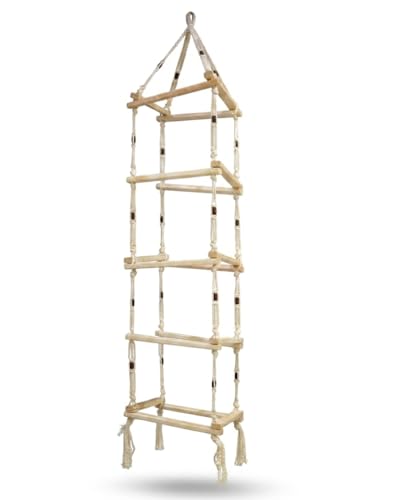
Screen time guidelines get a lot of attention, but the flip side — giving children enough vigorous physical activity — often gets less practical advice. A wooden climbing rope ladder is one of the simplest ways to bring genuine gross motor challenge into a home, indoors or out, without needing a full playground.
Why Climbing Matters So Much
Climbing is one of the few activities that develops nearly every major physical skill at once: balance, core strength, coordination, spatial awareness, and risk assessment. Unlike a lot of “activity toys,” a climbing ladder gives real, honest physical feedback — if a foot placement is wrong, the child feels it immediately and self-corrects, building genuine body awareness rather than following abstract instructions.
- Gross motor strength — arms, legs, and core all engaged simultaneously
- Balance and proprioception — understanding where your body is in space
- Risk assessment — learning to judge “can I do this safely” in a controlled setting
- Confidence and body ownership — mastering a physical challenge builds real self-belief, not just praise-based confidence
Making the Most of It at Home
- Let them set the pace. Some children will climb confidently on day one; others need several sessions of just touching or sitting near it first. Both are normal.
- Spot, don't rescue. Stay close enough to catch a fall, but resist lifting a child up unless they're genuinely stuck — working through the challenge themselves is where the real learning happens.
- Use it for energy release. A few minutes of climbing before a task requiring focus (like sitting for a meal or story time) can genuinely help children settle afterward.
- Rotate placement. If space allows, moving it between rooms or indoor/outdoor keeps the challenge and environment fresh.
An Honest Note on Supervision
Climbing equipment, even simple wooden ladders, needs active adult supervision — not because the equipment is unsafe when used properly, but because young children's judgment about their own physical limits is still developing. This is a feature of the activity, not a flaw — supervised risk is exactly how children learn to judge real risk over time.
Best Age Range
Most children can safely start with supervised climbing from around age 2-3, with strength and confidence building steadily through the preschool years.
Tantrums' Wooden Climbing Rope Ladder is built with sturdy wooden rungs and durable rope, suitable for both indoor and outdoor active play.