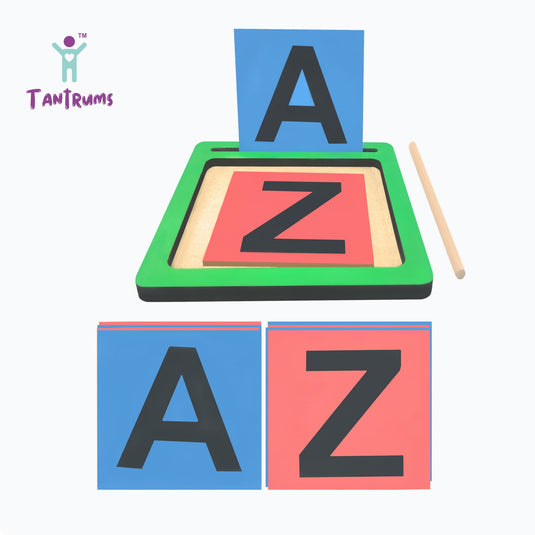
Maria Montessori's original sandpaper letters are over a century old, and they're still used in classrooms worldwide for one simple reason: tracing a textured letter with your finger builds a stronger, more durable memory of its shape than looking at a smooth, flat letter ever does.
Why Texture Changes Everything
Running a finger over a raised, gritty sandpaper letter engages the sense of touch alongside sight — and that combination creates a stronger memory trace in a young child's brain than visual learning alone. This is the same tactile-first approach behind Montessori's most enduring materials, and it's particularly effective for children who learn better through movement and touch than through passive looking.
- Letter shape memory — built through touch, not just sight
- Pre-writing muscle memory — the tracing motion mimics the movement needed for actual handwriting
- Sound-symbol connection — saying the letter's sound while tracing links touch, sight, and sound together
- Correct stroke direction — well-designed sets guide the correct starting point for each letter
How to Use Sandpaper Letters at Home
- Trace with two fingers. The traditional Montessori method uses the index and middle finger together, matching the same fingers used later to hold a pencil.
- Say the sound each time. Trace while saying the letter's sound, not its name — “muh” for M, not “em” — since sounds are what's directly useful for early reading.
- Introduce a few letters at a time. Don't try to cover all 26 at once; 3-4 letters mastered well matters more than superficial exposure to the whole alphabet.
- Follow with the tray. If your set includes a sand or rice tray, let your child “write” the traced letter in the sand immediately afterward — reinforcing the motion in a different medium.
Why This Especially Helps Reluctant Writers
Children who resist pencil-and-paper writing often respond well to sandpaper letters precisely because there's no pencil pressure or grip challenge involved — just a finger and a textured surface. This lower-pressure entry point can make a real difference for children who've started to associate writing with frustration.
Best Age Range
Most children benefit from sandpaper letters starting around age 3, continuing to reinforce handwriting readiness through age 5.
Tantrums' Coloured Sandpaper Capital Alphabet with Tray features textured, colour-coded letters designed for confident daily tracing practice.