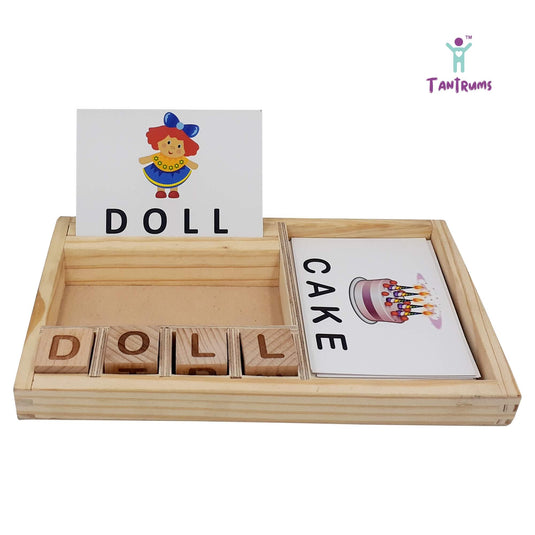
Between knowing individual letters and reading full sentences, there's a crucial middle step that a lot of learning materials skip: building actual three-letter words. A wooden CVC (consonant-vowel-consonant) spelling toy fills exactly this gap, using simple words like “cat,” “dog,” and “sun” as a child's first bridge into real reading.
Why CVC Words Are the Right Starting Point
CVC words are deliberately chosen in early literacy because they follow simple, predictable sound patterns — each letter makes one clear sound, blended together smoothly. This predictability makes them the easiest possible entry point into blending sounds together to read a whole word, rather than jumping straight into irregular or complex spellings.
- Phonics blending — combining individual letter sounds into a full word
- Early reading confidence — successfully “reading” a first word is a genuine milestone moment
- Vocabulary building — usually paired with picture cards showing the word's meaning
- Fine motor practice — placing letter tiles precisely to spell each word
How to Use It Effectively
- Use the picture cards. Match the picture to the word being built — this connects the abstract letters to a real, meaningful object.
- Sound it out slowly first. “C... a... t... cat!” said slowly, then blended, teaches the actual mechanics of reading rather than word memorisation.
- Change one letter at a time. Once “cat” is mastered, swap the C for an H to make “hat” — showing how small changes create new words, which builds genuine phonics understanding.
- Celebrate the first “read.” The moment a child sounds out and reads their first full word independently is worth genuinely celebrating — it's a real cognitive leap.
Why This Matters More Than Memorising Sight Words
Some early reading approaches rely heavily on memorising whole words by sight. CVC blending, by contrast, teaches children the actual mechanics of decoding — a skill that generalises to new, unfamiliar words later, rather than requiring memorisation of an ever-growing word list.
Best Age Range
Most children are ready for CVC blending from around age 4, once they have solid recognition of individual letter sounds, continuing through age 6 as reading fluency builds.
Tantrums' Wooden Spelling Toy Game includes CVC flash cards and movable letters designed for hands-on early reading practice.