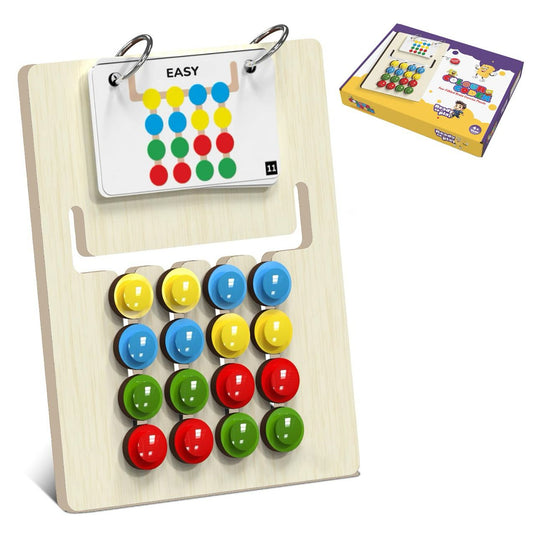
Matching games look almost too simple to matter — find the pieces that go together — but the skill underneath, visual matching and memory, is one of the most widely useful cognitive abilities a young child develops, showing up later in reading, maths, and even social recognition.
What Matching Games Actually Train
To successfully match two colours (or shapes, or pictures), a child has to hold one image in working memory while scanning for its counterpart — a genuine memory and attention exercise disguised as simple play. This same skill — hold, compare, match — is directly used later when comparing letters, numbers, or even faces and objects in daily life.
- Visual memory — holding an image in mind while searching for its match
- Colour and pattern recognition — sharpening the ability to notice similarities and differences
- Attention and focus — sustained concentration through a full matching session
- Turn-taking — when played with a parent or sibling, an early social skill
How to Play It at Home
- Start with fewer pairs. Begin with just 3-4 pairs rather than a full set — success with a manageable number builds confidence before increasing difficulty.
- Narrate while matching. “Red goes with red” reinforces vocabulary alongside the visual task.
- Turn it into a two-player game. Taking turns finding matches builds patience and social turn-taking, not just the cognitive matching skill.
- Increase difficulty gradually. As matching becomes easy, add more pairs or introduce trickier, more similar-looking options to keep the challenge appropriate.
Why This Skill Matters Well Beyond the Game
Visual matching and short-term memory are genuinely foundational skills — they're used constantly in early reading (matching letter shapes), early maths (comparing quantities), and everyday tasks like sorting laundry or setting a table. A matching game is a simple, low-pressure way to build this ability well before it's needed for more “academic” tasks.
Best Age Range
Simple colour matching can start from around age 2, with more complex matching (patterns, pictures, memory-based matching games) becoming appropriate from age 3-4 onward.
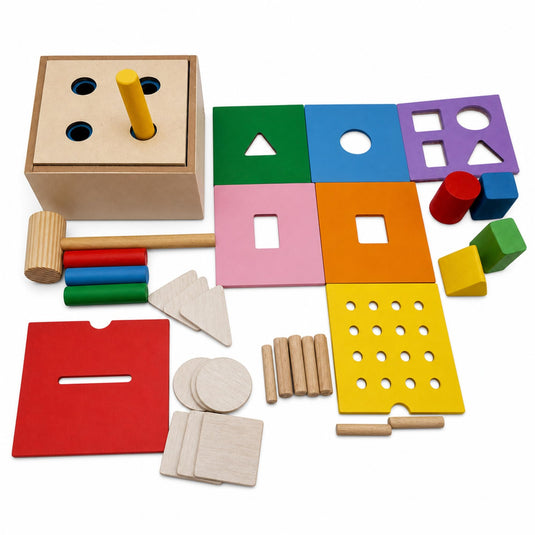
Tantrums' Colour Matching Game features vibrant, sturdy wooden pieces designed for both independent and shared play.