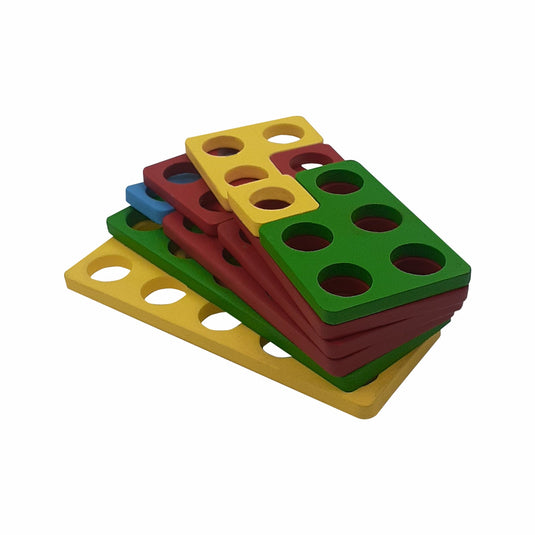
Numbers as abstract symbols — the digit “5” on a page — mean very little to a young child until they've physically experienced what “five” actually feels like. Numicon-style counting shapes solve this by turning each number into a distinct, touchable shape with a consistent pattern of holes, making quantity something a child can literally feel with their fingers.
Why Shape-Based Counting Works So Well
Each Numicon shape represents a number through a fixed, colour-coded pattern — so “four” always looks and feels the same way, every time. This consistency helps children build a genuine mental image of quantity, rather than just memorising number names in sequence without understanding what they represent.
- Number sense — understanding quantity, not just counting by rote
- Early addition and subtraction — physically combining or removing shapes to see how totals change
- Pattern recognition — noticing how each number's shape relates to the ones before and after it
- Fine motor skills — fitting pegs through the holes in each shape
How to Play With It at Home
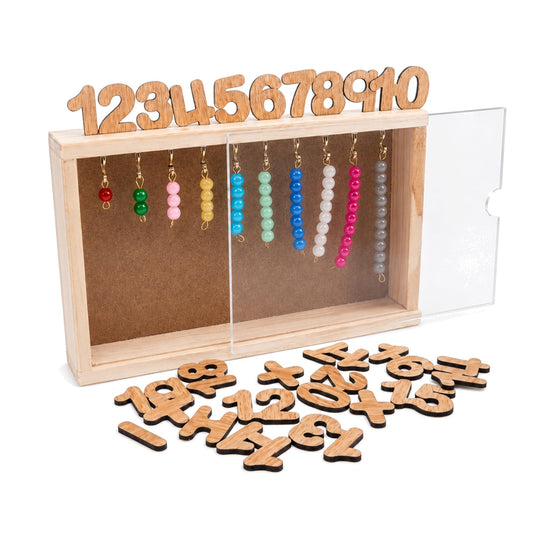
- Start with matching, not maths. Before any addition, just let your child match shapes to numbered cards or a number line — this builds the shape-to-quantity link first.
- Build “number staircases.” Lining shapes up from 1 to 10 in order visually shows how quantity increases — a simple but powerful visual for young children.
- Introduce addition physically. “If we put the 2 shape next to the 3 shape, how many holes are there altogether?” turns addition into something countable and visible, not abstract.
- Use pegs for fine motor practice. Placing small pegs through the holes doubles as its own grip-strength activity alongside the maths content.
Why This Beats Flashcard Memorisation
Rote memorisation of number names without understanding quantity is a common early gap — a child might say “five” correctly without truly understanding what five objects looks or feels like. Shape-based, hands-on counting closes that gap directly, which is why this approach is widely used in both Montessori and mainstream early-years classrooms.
Best Age Range
Most children benefit from shape-based counting from around age 3, with the addition and subtraction extensions becoming genuinely useful through age 5.
Tantrums' Numicon Math Counting Game uses colour-coded shapes and pegs to teach counting, addition, and subtraction hands-on.