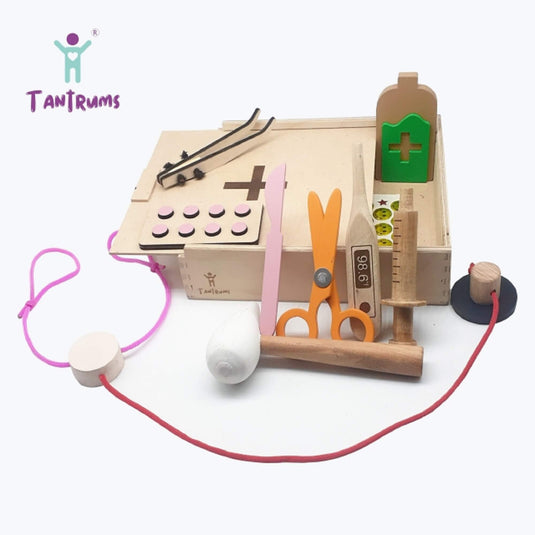
Doctor visits can be genuinely scary for young children — unfamiliar tools, a stranger touching them, sometimes an injection. A pretend doctor set gives children a low-stakes way to rehearse and process this experience through play, often making real visits noticeably less stressful.
Why Pretend Play Helps Process Real Fears
Play is how young children work through experiences that feel confusing or scary in real life. By “being the doctor” themselves — examining a teddy bear's ears, listening to its heartbeat, giving a pretend injection — a child flips the power dynamic of a real doctor's visit, moving from feeling like something is being done to them to being the one in control.
- Emotional processing — rehearsing a stressful scenario in a safe, controlled way
- Empathy building — caring for a “patient” builds early nurturing and empathetic behaviour
- Vocabulary — learning the names of tools and body parts through play
- Role understanding — building familiarity with what a doctor's visit actually involves
How to Use It Before a Real Doctor's Visit
- Play doctor a few days before an appointment. Let your child practise on a stuffed animal or on you, narrating what each tool does.
- Use accurate, calm language. “The stethoscope helps us hear your heart beating” is more reassuring than vague or scary descriptions.
- Let them be the doctor, not just the patient. Giving your child the doctor's role — rather than always being examined themselves — builds a sense of control over the situation.
- Debrief after a real visit. Playing doctor again after an actual appointment can help process how it went, especially if anything was uncomfortable or upsetting.
Beyond Medical Play
Even outside the context of doctor visits, this kind of nurturing, caretaking pretend play builds genuine empathy — practising the actions of caring for someone else, even a toy, lays groundwork for real compassion and social awareness later.
Best Age Range
Most children engage meaningfully with doctor role-play from around age 2.5 to 3, and it remains useful through the preschool years, especially around real medical appointments or vaccinations.
Tantrums' Kid's Doctor Set includes a 10-piece wooden tool set with its own carrying case, built for years of pretend play.